
We are delighted to share that the Alliance to Zero has successfully submitted our Consultation Statement to the EU Circular Economy Act! The consultation period has now closed. If you have any further questions please reach out to us at: [email protected].
You can read our signed consultation statement here.
Our key proposal introduces a new category in the Waste Hierarchy: “Circular Material Use”.
We need establish proactive, circularity-oriented corporate waste management based on end-to-end thinking that enables the availability of high-quality recycled materials.
In summary, our submission to the EU asks them to consider:
- Integrating “circular material use” into the logic of the waste hierarchy used in EU legislation
- Allowing the deduction of circular material volumes from total waste volume
- Enabling facilitation of circular reprocessing such as transportation of circular material across EU borders.
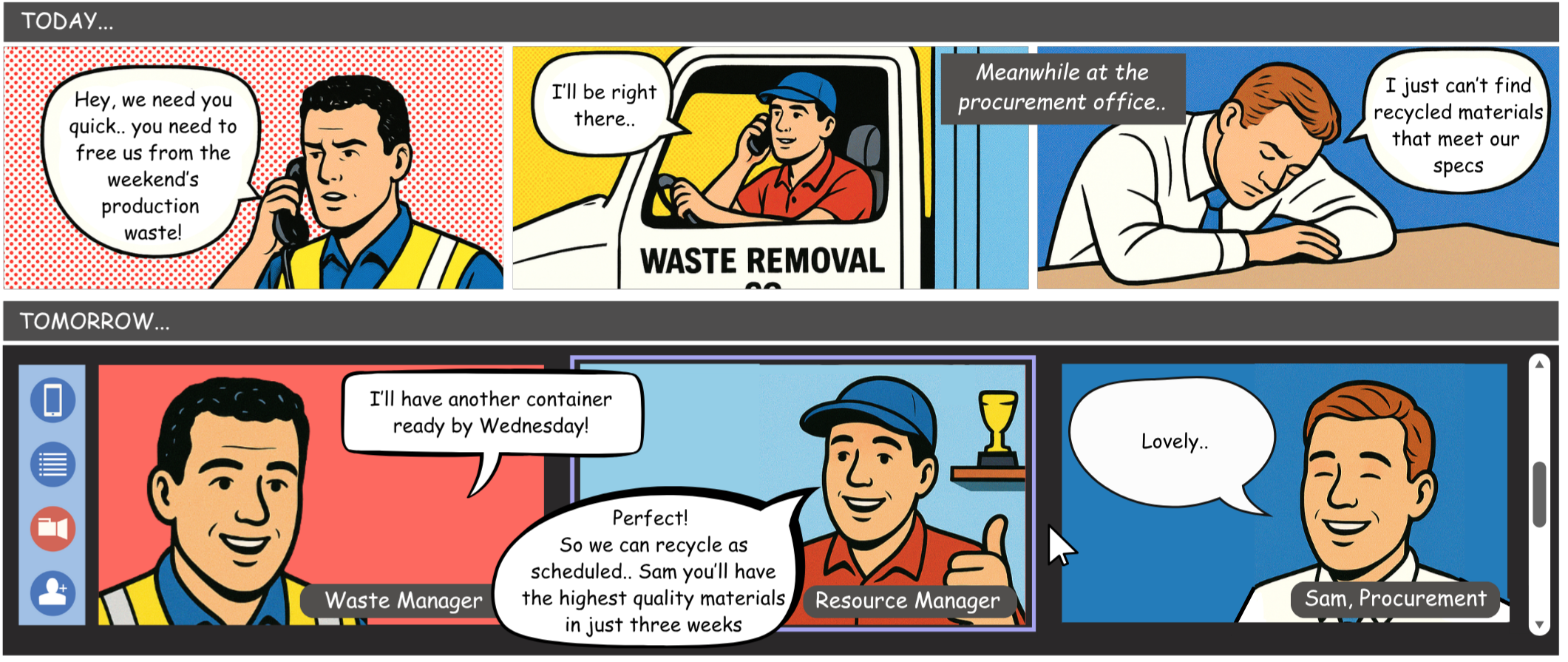
Why do we need to act? Today, there is a scarcity of high-quality recycled materials
Legislation dictates how we all operate and is therefore an important lever for change.
Current legislation requires organizations to send their waste to a licensed waste dealer who then issues a certificate of legal compliance that includes the end-of-life treatment. Of the end-of-life treatments, “recycling” is the only category that exists for all further waste collection pathways that include material recovery.
Current waste management practices therefore focus on finding a partner that accepts a company’s waste volumes in a legally compliant way. Ideally, however, those partners would also offer access to a third party who would re-utilize that waste as a high value resource.
As a result, today’s standard recycling practices:
- Have the sole reprocessing responsibility with the recycling industry
- Pool material volumes into larger batch sizes to minimize reprocessing cost
There are two key problems with this practice for e.g. polymer applications is:
- Mixed feedstock, even when sorted for polymer type and color, results in an average polymer quality
- Current standard practices do not allow for traceability and thus control of potential contaminants
The consequence? A lack of high quality polymers.
- Applications that require high polymer quality (typically linked to long chain lengths) struggle to source recycled materials on the market
Hygiene-critical applications that need secure biocompatibility or are sensitive to outgassing at low concentrations cannot source recycled material at an acceptable standard.
How we can promote change? A mindset change guided by a new metric: circular material use
We need to encourage end-to-end thinking in corporate waste management programs that:
- Focuses on preserving maximum material quality in waste volumes
- Systematically establishes the reprocessing value chain, to connect corporate waste management, recycling services with future customers/users of those recycled materials
In this way, we can make recycled materials available for even those high-demand applications.
By doing this, we also enable compliance with the recycled content ambitions of the EU, reflected in the Packaging and Packaging Waste Regulations (PPWR).
We need the cooperation of the whole value chain to realize circular material use
To comply with the demand for high-quality waste for certain applications, waste collection needs to be run in prequalified, segregated and fully-traceable waste streams.
- Prequalification makes sure that only materials matching the future material requirements are entering the feedstock.
- Segregation prevents contamination with foreign materials and controls the material quality.
- Traceability across the reprocessing chain strengthens quality control and creates plannability.
To guide this mindset shift: We need an accepted metric, supported by legislation, to distinguish between circular material use and standard recycling (where responsibility is externalized).
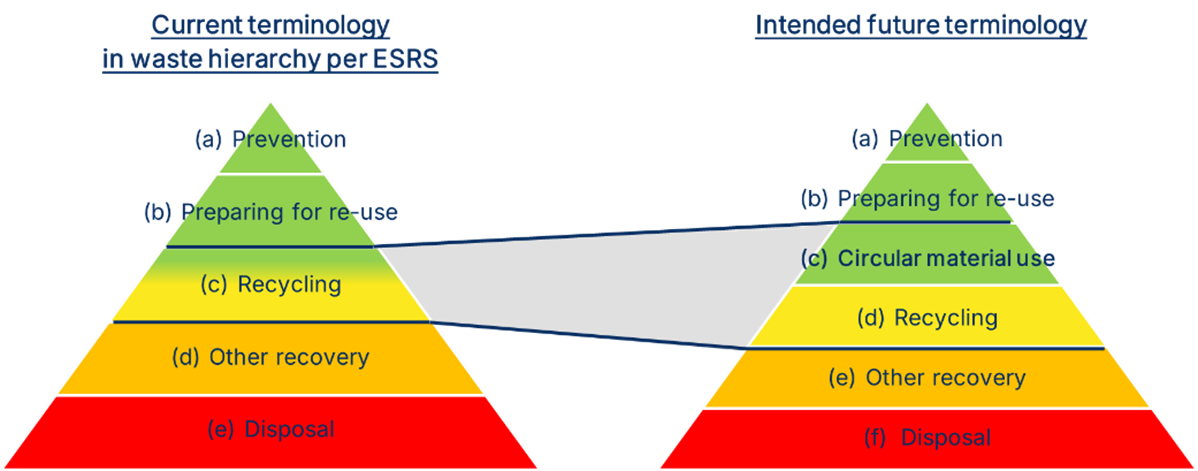
With our collective submission to the EU Circular Economy Act, we are explicitly demanding the EU Commission:
- Adapt the waste hierarchy in European legislation by introducing a “circular material use” category. This category shall reflect volumes sent from their end-of-life location to controlled, segregated waste streams that deliver secondary raw material of the same specification as explicit inflow material volumes under surveillance of an EN 15343 audited traceability.
- Adapt the waste reporting metrics and guidance to explicitly foresee deduction of “circular material use” volumes from the total amount of waste generated.
- Create EU-wide, harmonized transport legislation that supports waste verified for circular material use to be transported easily and duty-free across EU borders.
The consultation period has now closed.
See here for more details: Commission launches consultation for upcoming Circular Economy Act – Environment.